

 1. Use a Corrugated Box 2. Provide Internal Protection 3. Close the Box Securely 4. Use Proper Labeling |
|
| Step 2. Provide Internal Protection | |
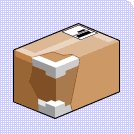
It´s important that you cushion the contents of your package properly. Please be sure that you wrap each item separately. Fragile articles need both suitable separation from each other and clearance from the corners and sides of the box. Each item should be surrounded by at least two inches (five cm) of cushioning and be placed at least two inches (five cm) away from the walls of the box. This will protect your items from product-against-product damage and shield them from the shock and vibration that can be conducted from the exterior of the box to its contents in transit. |
 |
Improper cushioning
material includes clothing, blankets, and pillows. Instead, please use
the materials listed below to cushion and protect your shipment: Designed to protect and cushion lightweight items Used in multiple wraps and layers to ensure that the item is completely protected, especially on corners and edges Inflatable
packaging (air bags) Expanded
polystyrene "peanuts" Engineered
foam enclosures Foam-in-place
(a foam, sprayed into the box or mixed in packets, that expands and
forms a protective mold around contents) Corrugated
liners and inserts Crumpled
kraft paper Note: Fragile objects -- such as electronics, glass, ceramics, and artwork -- require special packaging for safe shipment. Packages containing these and similar items may require added cushioning or a double box. |
|
 |
|